
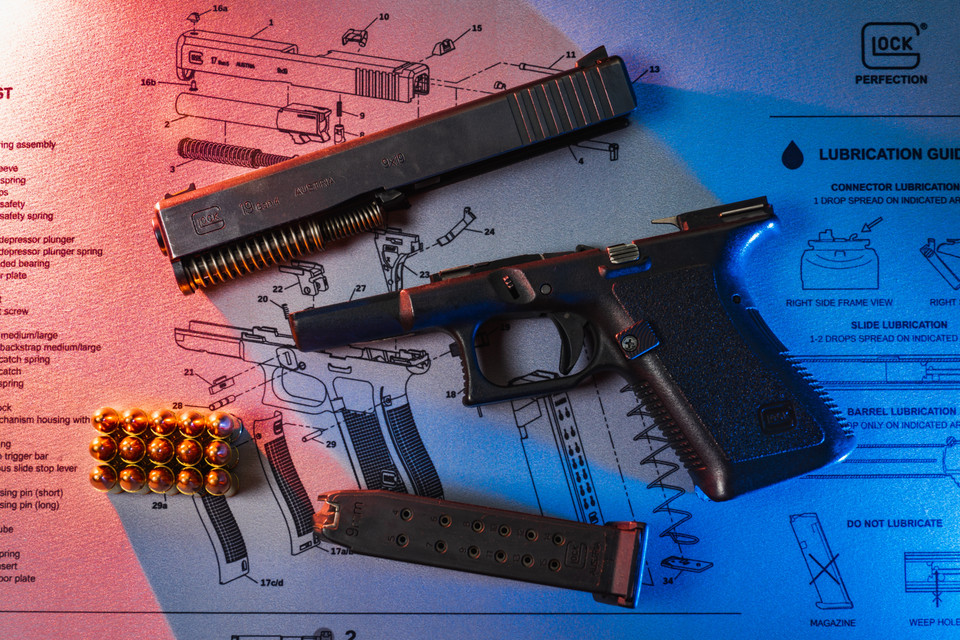
A stage timer tells the truth fast. If your sight picture drags, your dot tracks poorly, or your gun feels nose-heavy coming out of transitions, the slide is part of the story. Choosing the best Glock slide for competition shooting is not about buying the flashiest cut pattern on the page. It is about getting the right balance of weight, optic mounting, recoil behavior, and reliability for the way you actually shoot.
Competition shooters tend to learn this the expensive way. A slide can look aggressive, shave ounces, and still be the wrong fit for your division, your ammo, or your Glock model. The right one helps the pistol return flatter, present faster, and stay dependable through long practice sessions and match days. That is the standard that matters.
The short answer is control under speed. A competition slide should support faster target acquisition, predictable cycling, and clean optic mounting without turning your pistol into a tuning project you do not need.
Weight is the first factor most shooters notice. A lighter slide can cycle faster and feel more responsive, especially with a properly matched recoil spring and minor-power-factor loads. That can be a real advantage in USPSA, Steel Challenge, or range drills built around transitions and split times. But there is a trade-off. Go too light and you may end up chasing reliability with ammo and spring changes. For many shooters, the best result comes from reduced mass, not the absolute lightest slide possible.
Optics readiness is just as important. Most competition buyers today want a red dot, which means your slide needs a mounting system that holds zero and keeps the optic low enough for a natural presentation. A direct-milled slide usually gives you the lowest, most secure setup for a specific optic footprint. MOS-style systems offer more flexibility if you may change optics later. The better choice depends on whether you value dedicated performance or future-proof versatility.
Material quality and machining matter too. A competition pistol gets run hard. Repeated draws, fast strings, heat, carbon, and cleaning cycles will expose poor tolerances fast. Good slides are built from quality steel, cut with precision, and finished to resist wear without sacrificing fit. The extra attention to machining is not cosmetic. It affects how the slide runs on the frame, how the barrel locks up, and how confidently your optic stays put.
Shooters often talk about slide windows and aggressive cuts as if they are automatically better. Sometimes they are. Sometimes they are just visual flair. What matters is how the slide mass works with your barrel, recoil spring, and ammo.
A heavily windowed Glock 34 slide set up for soft competition loads can feel quick and flat. The dot lifts less, the gun transitions cleanly, and the return to zero feels sharp. That setup can be excellent for a dedicated range or match gun. On the other hand, a slightly heavier slide may feel more forgiving with factory ammo and require less tuning. If you are not planning to experiment with springs and loads, a moderate cut pattern is often the smarter play.
Ported slide setups complicate this in a good way and a bad way. Porting can reduce muzzle rise and help keep the gun flatter, especially with the right barrel. That appeals to serious competitors chasing every edge. But ported systems add more variables, more blast, and more maintenance. They are not ideal for every division or every shooter. If your priority is broad match usability and clean reliability, a non-ported optics-ready slide is often the safer choice.
This is where a lot of buyers get stuck. Both options can work, but they serve different priorities.
A direct-milled slide is usually the performance-first answer. The optic sits lower, the interface is simpler, and there are fewer parts between the slide and the sight. That can improve durability and make the dot easier to pick up on the draw. If you already know you are committed to a specific optic footprint, direct milling is hard to beat.
An MOS-style slide gives you flexibility. If you are comparing footprints, trying different optics, or want a more adaptable setup, that flexibility has real value. For the shooter still dialing in a competition build, that can make sense. The trade-off is that plate systems add another layer to the stack, and not all mounting solutions feel equally solid under heavy use.
For many serious competitors, the best Glock slide for competition shooting is a well-machined direct-milled slide matched to the optic they trust. For many practical buyers, an MOS-compatible slide is the better purchase because it leaves room to evolve.
Not every Glock platform plays the same in competition, and the slide you choose should reflect that.
The Glock 34 has long been a competition favorite for a reason. Its longer sight radius, extended slide length, and balanced feel make it a natural fit for USPSA, IDPA, and general range competition. A Glock 34 slide with strategic lightening cuts and an optic cut can be an outstanding setup for shooters who want speed without giving up stability. If your goal is a purpose-built match gun, this is often the first platform to consider.
A Glock 17 slide sits in a very practical middle ground. It gives you a full-size frame and proven shootability, but with a slightly more compact overall profile than the 34. For shooters who want one gun that can train hard, compete well, and stay flexible, a competition-oriented Glock 17 slide makes a lot of sense. It is a common choice for people who want performance without committing to a longer setup.
Can a Glock 19 work in competition? Absolutely. Is it the first choice for a dedicated match build? Usually not. The Glock 19 is more of a crossover option. If you already own one and want to improve dot capability, handling, and responsiveness, an upgraded slide can absolutely make it more competitive. Just keep expectations realistic. You are optimizing a compact platform, not turning it into a long-slide race gun.
Some upgrades earn their keep immediately. Front and rear serrations help with manipulations and press checks, especially when your hands are sweaty or you are running the gun hard. A clean optic cut with proper screw engagement is non-negotiable. Enhanced machining around the ejection port can reduce unnecessary mass while maintaining structural integrity.
Finish quality matters more than many buyers expect. A solid coating helps resist wear from holsters, carbon, and repeated handling. That keeps the slide looking sharp, but more importantly, it protects your investment.
What is easier to overspend on is cosmetic complexity. Deep patterns, dramatic windows, and ultra-stylized cuts can look great, and there is nothing wrong with wanting a pistol that stands out. But on a competition build, function has to stay in front of appearance. The best-performing slide is the one that helps you shoot better, not the one that attracts the most attention on the bench.
Competition shooters love speed, but nobody loves a malfunction on the clock. That is why the best slide is not always the most aggressively modified one.
Reliable performance starts with correct generation and model fitment. It continues with quality internal parts, proper assembly, and an optic mounting system that stays secure. Then it gets tested with your ammo, your recoil spring setup, and your actual shooting cadence. A slide that runs beautifully for fifty rounds and starts choking at two hundred is not a competition upgrade. It is a distraction.
This is why experienced Glock owners tend to buy from specialists instead of general accessory sellers. Platform knowledge matters. A seller focused on Glock slides, like Glock Mos Slide Shop, is more likely to understand the fitment details and optics-ready nuances that make or break your build.
If you want the clearest answer, here it is. For most dedicated competitors, the best Glock slide for competition shooting is a precision-machined Glock 34 or Glock 17 slide with moderate weight reduction, a quality optic cut, strong serrations, and proven compatibility with your generation and optic footprint.
If you want maximum performance and already know your optic, direct-milled usually wins. If you want flexibility and are still refining your setup, MOS-style compatibility is a smart choice. If you are running factory ammo and want minimal tuning, avoid going excessively light. If you handload or tune springs carefully, you can push harder into reduced-mass designs.
That is the real answer most buyers need. There is no universal winner independent of division, ammo, optic, and shooting style. There is only the slide that fits your use case best and helps you shave time without giving away reliability.
A good competition slide should feel like a performance part, not a compromise. When the fit is right, the dot tracks cleanly, the gun cycles with authority, and the pistol comes back on target the way you want it to, you stop thinking about the hardware and start focusing on the stage. That is exactly where you want to be.