If you are asking will gen 3 slide fit gen 4 frame, the short answer is maybe physically, but not correctly or reliably without paying attention to the exact Glock model and a few critical parts. This is one of those fitment questions that sounds simple until you get into recoil spring dimensions, dust cover geometry, and generation-specific slide nose cuts.
That matters because with Glock parts, close is not good enough. A slide that can be forced onto a frame is not the same thing as a slide that cycles properly, returns to battery consistently, and holds up under live fire. If you are building a custom setup or replacing a factory upper, you need fitment that respects the engineering, not just the outline.
No. There is no universal yes across the Glock lineup.
The biggest reason is that Glock generations changed more than grip texture and backstraps. On many models, Gen 4 introduced a dual recoil spring assembly, and that changed the front end of the slide and frame relationship. Some pistols can be adapted. Others are poor candidates. The answer depends heavily on whether you are talking about a full-size model like the Glock 17, a compact like the Glock 19, or another frame size entirely.
For most shooters, the safest way to think about it is this: Gen 3 slides are designed around Gen 3 frames, and Gen 4 slides are designed around Gen 4 frames. Cross-generation fitment is an exception case, not the default.
The main mechanical issue is the recoil spring assembly. Gen 3 pistols generally use a single recoil spring setup, while many Gen 4 models use a dual recoil spring assembly. That affects the diameter and clearance required at the front of the slide.
On a Gen 4 frame, the recoil spring assembly area is set up for Gen 4 geometry. A Gen 3 slide may not have the internal clearance or front opening needed to work with that assembly the way Glock intended. Even if the slide rails line up, the front-end mismatch can stop the build from functioning correctly.
There are also smaller fitment details that matter. Slide profile, guide rod channel dimensions, and lockup tolerances can vary by generation and model. That is why experienced builders never treat Glock compatibility as a one-size-fits-all question.
This is where many buyers get tripped up.
A Glock 17 Gen 3 slide does not simply drop onto a Glock 17 Gen 4 frame and call it done. The Gen 4 Glock 17 uses a larger dual recoil spring assembly, and the Gen 3 slide nose is not cut the same way to accept it. That front opening difference is the problem point.
Some builders use an adapter to run a Gen 3 Glock 17 slide on a Gen 4 frame, but that is a parts-specific workaround, not native compatibility. If you are building for reliability, especially on a defensive or carry gun, you should treat adapter-based setups with caution. They can work when the parts are chosen correctly, but they demand more attention than a proper generation-matched slide.
For a performance-oriented build, the cleaner move is usually a slide cut and built specifically for your frame generation.
The Glock 19 is where the conversation gets more nuanced.
On Glock 19 pattern pistols, Gen 3 and Gen 4 compatibility tends to be more forgiving than on the Glock 17, but that does not mean every Gen 3 slide will fit every Gen 4 frame without issue. Tolerances, recoil spring setup, and manufacturer-specific machining all matter, especially once you move beyond factory parts and into aftermarket slides.
This is why product-level fitment information matters so much. A custom Glock 19 slide may be advertised as Gen 1-3 compatible, Gen 4 compatible, or built around a very specific frame setup. If you assume all Glock 19 slides interchange freely, you can end up with cycling issues, recoil spring interference, or an upper that looks installed but does not run the way it should.
Once you leave factory Glock parts, the question changes from generation theory to machining reality.
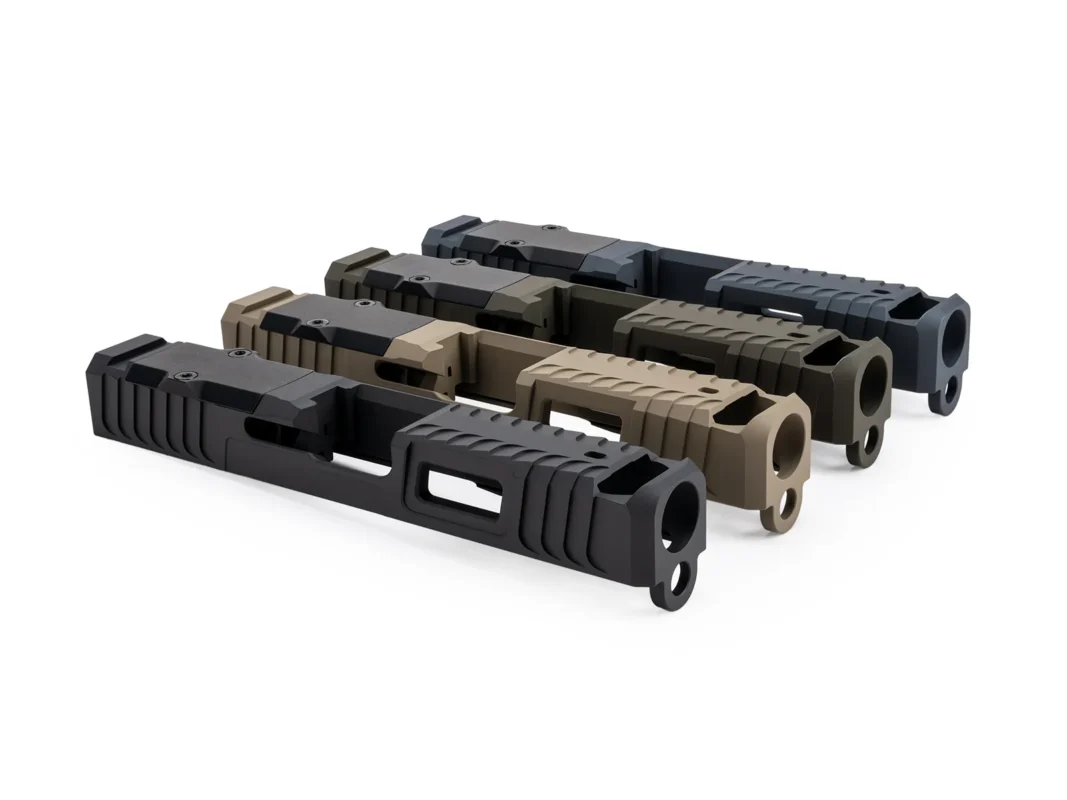
A quality aftermarket slide is cut to exact specs, but those specs are still generation-specific. Some are intentionally built for Gen 3 because that pattern has become the standard for many custom builds and aftermarket frames. Others are made specifically for Gen 4 compatibility. The external style may look similar, but the internal dimensions and front-end cuts are what determine whether the setup will actually function.
That is why serious buyers should check three things before ordering: the Glock model, the generation the slide is cut for, and the recoil system the frame requires. If any one of those is off, the build can turn into a troubleshooting project fast.
Best case, the slide does not install cleanly and you catch the issue on the bench.
Worst case, it installs with enough resistance or partial compatibility that you think it works, but you get failures to cycle, erratic return to battery, abnormal wear, or unreliable lockup. Those problems are frustrating on a range gun and unacceptable on a defensive pistol.
This is where precision matters more than convenience. Glock platforms have a strong reputation for reliability, but that reliability comes from correct parts geometry, not wishful thinking. A bad cross-generation match can erase the very reason people trust the platform in the first place.
Start with the exact model, not just the generation. A Glock 17 answer is not automatically a Glock 19 answer.
Next, look at the slide manufacturer’s fitment notes. If the slide is made for Gen 3 only, assume that means Gen 3 only unless the manufacturer clearly says otherwise. If you are considering an adapter or conversion part, verify that it was designed for your exact model and recoil assembly setup.
Then think about your intended use. A range toy gives you more room to experiment. A carry gun, duty setup, or hard-use competition pistol deserves a cleaner solution. Reliability should win over convenience every time.
In a lot of cases, no.
Can some Gen 3 slide to Gen 4 frame combinations be made to work? Yes. Should that be your first choice for a serious build? Usually not. When you have access to slides engineered for the correct generation, that is the smarter path. You get better fitment confidence, cleaner cycling, and fewer surprises when the gun is under recoil.
For shooters upgrading to optics-ready or performance slides, buying the right generation-specific part from the start is usually cheaper than solving fitment problems later. It also protects the rest of the build. Barrel lockup, recoil behavior, and long-term wear all benefit when the slide and frame were meant to work together.
If you are building around a Gen 4 frame and want dependable performance, look for a slide explicitly cut for that frame generation and model. That is especially true if you are adding an optic, changing internals, or tuning the recoil system.
A properly matched slide gives you more than compatibility. It gives you a stronger foundation for accuracy, consistent cycling, and a better overall shooting feel. That is the difference between a parts pile and a serious Glock build.
At Glock Mos Slide Shop, that generation-specific approach is the standard. It is how you avoid guesswork and get a setup that looks right, runs hard, and holds up.
If you are still weighing a Gen 3-on-Gen 4 combination, slow down and verify every detail before you buy. The best Glock upgrades are not just aggressive-looking – they are engineered to fit, cycle, and perform the way a serious shooter expects.