If you are comparing mos vs milled slide options, you are already asking the right question. The optic itself matters, but the way it mounts to your Glock has a huge impact on reliability, sight height, durability, and how the pistol feels when you run it hard.
For a lot of shooters, this choice gets reduced to convenience versus performance. That is part of the story, but not all of it. The better answer is that your best setup depends on the optic you want, how permanent you want the build to be, and whether your Glock is a range toy, carry gun, or match pistol.
An MOS slide uses a factory-style optic cut that accepts adapter plates. The slide is cut to a standardized footprint, and the plate bridges the gap between the slide and the specific red dot footprint. That gives you flexibility. If you change optics later, you usually change the plate instead of changing the slide.
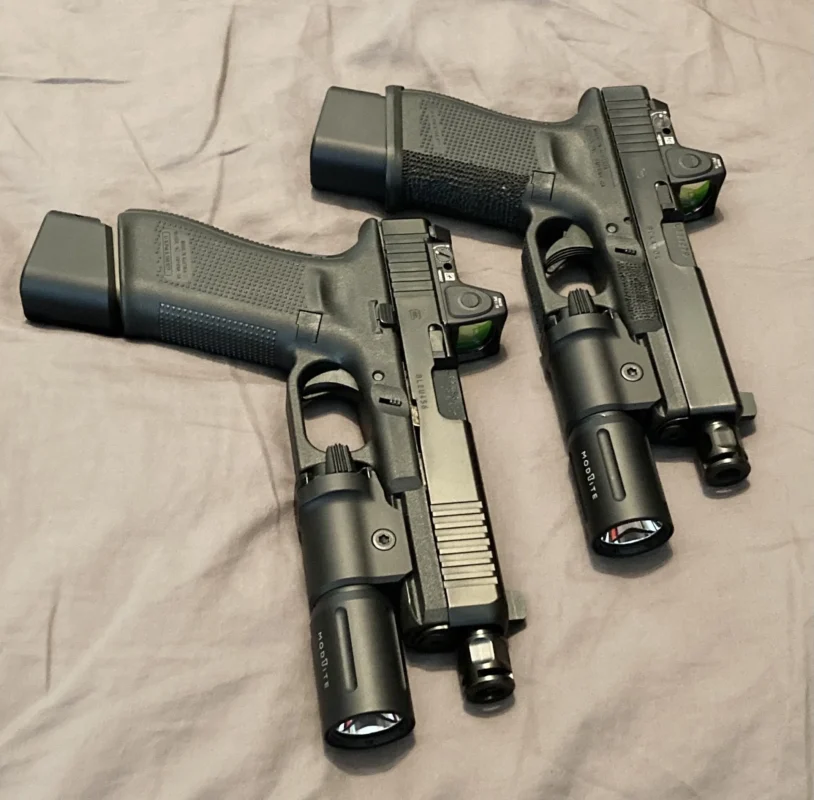
A milled slide is cut directly for a specific optic footprint. The red dot sits lower because there is no extra plate stacked between the optic and the slide, or at least far less material in the stack depending on the design. It is a more dedicated setup, and that dedicated fit is the main reason experienced shooters often prefer it.
Neither system is automatically better in every case. One favors modularity. The other favors a more refined fit.
MOS became popular for a reason. It gives Glock owners an easier entry point into red dots without committing to one footprint forever. If you are still deciding between an RMR-pattern optic, an SCS, or another compatible option, MOS gives you room to experiment.
That matters for newer red dot users. A lot of buyers are not ready to lock into one optic after reading a few product pages. They want to try a setup, shoot it, maybe swap optics later, and keep the rest of the pistol unchanged. MOS makes that realistic.
There is also a convenience factor. You can start with a slide designed around the MOS system and get to an optics-ready pistol faster. For buyers who want straightforward compatibility and less guesswork, that has real value.
The trade-off is that adapter plates add another interface. More parts mean more variables. Plate quality, screw quality, proper torque, and fit tolerance all matter. A good MOS setup can run very well, but it asks more from the mounting system than a direct mill does.
A milled slide is about fitment precision. When the optic footprint is cut directly into the slide, the dot usually sits lower and mates more securely with the slide body. That lower mounting position can improve presentation, reduce the need for extra-tall backup sights, and create a cleaner sight picture.
For shooters focused on hard use, a direct-milled setup often feels more purpose-built. There is less stacked hardware and usually less chance for movement if the machining is right and the screws are correct. That is why many serious builders, competitive shooters, and experienced Glock owners lean toward a milled slide when they know exactly which optic they want.
There is also an aesthetic advantage. A well-cut slide with the optic nested low looks cleaner. More importantly, it often feels cleaner during use. The pistol tracks naturally, and the dot can be easier to find on the draw once you are used to that lower placement.
That said, a milled slide is less forgiving if your plans change. If you cut for one footprint and later move to another, you may need a new slide or a compromise solution. That is the price of a dedicated setup.
This is where the comparison becomes practical. In a mos vs milled slide decision, optic height is one of the biggest user-facing differences.
MOS setups generally place the optic a bit higher because of the plate system. That can mean taller backup irons and, for some shooters, a slightly less natural presentation at first. It is not a deal breaker, and plenty of shooters adapt quickly. But the difference is real.
A milled slide usually lets the optic sit deeper in the slide. That lower mount can help with faster dot acquisition and a more integrated feel. If you care about keeping the optic tucked in tight and reducing bulk on the top end, direct milling has a clear advantage.
For concealed carry, lower can also be better. A lower-mounted optic can reduce snag potential and keep the overall profile a little more streamlined. It is a small detail until you carry the pistol daily. Then small details start to matter a lot.
People often frame this as though MOS is unreliable and milled slides are always rock solid. That is too simplistic.
A quality MOS slide with a well-made plate, proper screws, and correct installation can be extremely dependable. A poorly machined direct-milled slide can still give you problems. The mount style matters, but so do machining tolerances, screw engagement, recoil lug support, and the quality of the optic itself.
This is why model-specific fitment and craftsmanship matter so much. Glock owners know that small tolerances become big headaches when they show up in cycling, zero retention, or optic movement. A precision-cut slide built for the exact model and generation gives you a better starting point no matter which route you choose.
If your priority is absolute confidence under repeated recoil, a direct-milled slide still gets the nod for many shooters. It reduces complexity. But the real answer is that both systems can perform if the parts are matched correctly and installed with care.
MOS often looks like the budget-friendly route at first, especially if you value flexibility. You can run one slide and adapt it to different optics with plates. That can save money if you are still testing setups.
A milled slide can deliver better value long term if you already know your optic choice. You are paying for a more dedicated solution that often gives you better mounting geometry and fewer compromises from day one. If you are building a pistol around a specific mission, that is money spent in the right place.
There is also the hidden cost of changing your mind. If you are the type of shooter who constantly swaps optics, MOS may save you from buying another slide later. If you are building one serious setup and sticking with it, a milled slide can keep you from spending extra on plates, taller sights, or workaround parts.
If this is your first pistol dot setup, MOS is often the easier on-ramp. It gives you room to learn what you like and keeps your options open. That flexibility is useful, especially if you are not yet committed to one optic footprint.
If you are building a dedicated carry gun, competition pistol, or hard-use range setup around a known optic, a milled slide usually makes more sense. It is cleaner, lower, and more tailored to performance.
The decision also depends on how you buy. Some shooters want a ready path with fewer decisions. Others want a slide that is cut with purpose for a specific optic and role. That is where a specialist retailer like Glock Mos Slide Shop stands out – the right answer is not just optics-ready, but model-correct, generation-correct, and built for the way you actually shoot.
The better question is not which system wins on paper. It is which system fits your optic, your Glock, and your intended use with the fewest compromises.
If flexibility is your top priority, MOS does exactly what it was designed to do. If performance refinement is the goal, a milled slide is hard to beat. Both can serve you well, but they reward different kinds of buyers.
Choose the setup that matches your end goal, not the one that sounds best in a forum argument. When the slide, optic, and purpose all line up, the pistol feels right the moment you press out.