
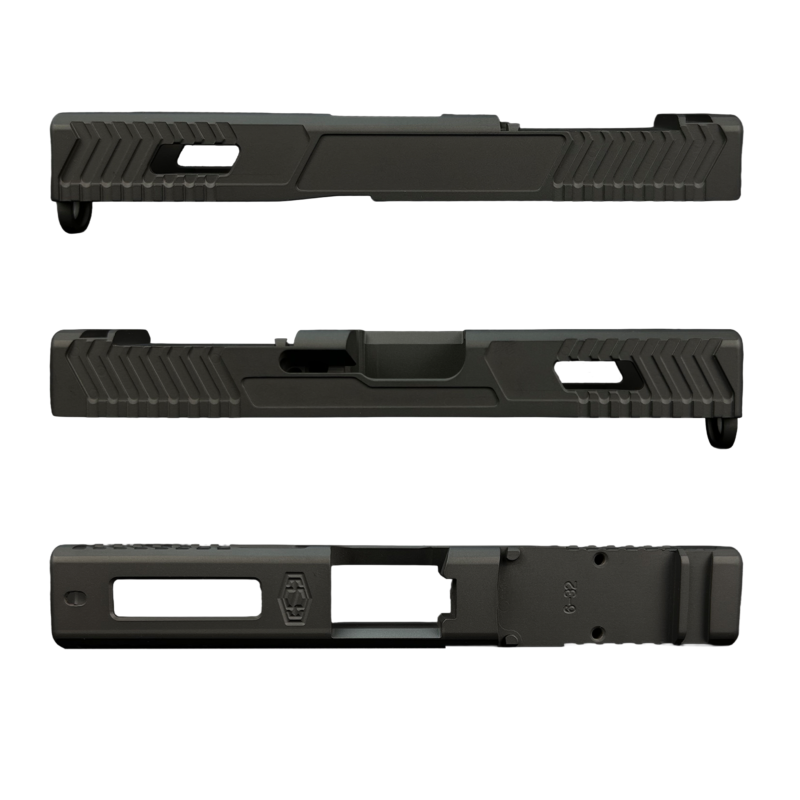
Mounting a red dot on a Glock sounds simple until you hit the real question: mos vs milled glock slide. That choice affects optic fit, sight height, reliability, cost, and how purpose-built your pistol feels once it is on the range or riding in a holster. If you are trying to build a cleaner, faster, more precise setup, this is the decision that shapes everything else.
At a glance, both systems let you mount an optic. That is where the similarity ends.
A Glock MOS slide uses the factory Modular Optic System. The slide is cut to accept adapter plates, and those plates let you mount different optic footprints. It is the more flexible option on paper because one slide can work with multiple red dots depending on the plate.
A milled slide is cut specifically for an optic footprint, or sometimes a very small family of footprints. The optic sits directly into the slide cut instead of stacking on top of a plate system. That usually creates a lower mount, a tighter fit, and a more integrated feel.
For a lot of shooters, the choice comes down to flexibility versus specialization. MOS gives you room to change your mind. A milled slide rewards you when you already know what optic you want and care about getting the most refined setup possible.
On a performance pistol, little details are not little for long. Slide mass, optic height, screw engagement, recoil forces, and backup sight compatibility all affect how the gun tracks and how confident you feel behind it.
With an MOS setup, you have the slide, then the plate, then the optic. That extra layer can raise the optic slightly higher over the bore. In practical terms, it can change your presentation and sometimes make co-witnessing with irons a bit more demanding.
With a milled slide, the optic usually sits deeper in the slide window. That lower position often helps the dot appear faster on presentation, especially for shooters who train regularly and want the pistol to point more naturally. It can also improve the overall look. A well-cut slide with the right optic has a purpose-built profile that many Glock owners prefer.
The strongest argument for MOS is versatility. If you are still deciding between optic brands, or if you may switch from one footprint to another later, MOS gives you options without committing to a permanent cut.
That flexibility matters for newer red dot users. Maybe you start with one optic, then decide you want a different window size, battery location, or reticle style. With MOS, that change is easier because the slide is not married to one footprint.
Factory MOS pistols also appeal to buyers who want an out-of-the-box optics-ready solution. There is comfort in sticking with a factory system, especially for owners who prioritize OEM configuration and broad aftermarket support. For many concealed-carry users and recreational shooters, that is enough reason to stay in the MOS lane.
The trade-off is that plates vary in quality. A weak plate can become the weak point in the whole setup. That is why serious shooters who run an MOS slide tend to pay close attention to hardware quality, proper torque, and optic compatibility.
A well-executed milled slide is built for a more dedicated job. Because the optic sits directly in the cut, you usually get better contact, less stacking of tolerances, and a lower overall mount.
That lower mount is not just about looks. It can help with faster dot acquisition and a more connected shooting feel. Competitive shooters often notice this first, but carry users notice it too, especially during repeated draw practice.
There is also a durability argument. Fewer parts between the optic and the slide can mean fewer opportunities for movement, fit issues, or plate-related failures. That does not mean every MOS setup is unreliable, because that would not be accurate. It means a direct-milled setup is often preferred when maximum rigidity is the goal.
If you already know you want a specific optic footprint, a quality milled slide is hard to beat. That is why many enthusiasts shopping upgraded Glock slides look for model-specific, optics-ready options that are cut with precision from the start. At Glock Mos Slide Shop, that kind of fitment-focused approach is exactly what serious buyers tend to value.
This is where the difference becomes obvious on the gun.
An MOS optic mount usually sits a bit taller because of the plate. Depending on the optic and plate combination, that can affect how naturally the dot appears when you punch the gun out. Some shooters adapt quickly. Others feel like they are hunting for the dot more than they should.
A milled slide often puts the optic lower and closer to the bore line. For many shooters, that creates a cleaner presentation and less visual adjustment during target transitions. It also tends to support a more refined co-witness setup with suppressor-height sights, though the exact result depends on the optic body and cut depth.
If your priority is the most natural shooting interface possible, milled usually has the edge. If your priority is keeping your options open across multiple optics, MOS still makes sense.
A lot of buyers assume MOS is always cheaper. Sometimes it is, but not always.
If you buy a factory MOS pistol or slide, then add a premium plate and the right sights, your final cost can move up quickly. On the other hand, a custom or aftermarket milled slide may look more expensive at first, but it can eliminate the need for extra mounting hardware and create a cleaner finished build.
There is also the question of future changes. If you expect to test different optics over time, MOS can save money by avoiding a new slide or new cut. If you already know your optic and want the strongest dedicated setup, paying for a properly milled slide once can be the smarter long-term move.
It depends on what the pistol is built to do.
For concealed carry, both systems can work well. An MOS slide is practical for the owner who wants adaptability and easy optic changes. A milled slide is attractive for the carrier who wants the lowest-profile, most integrated optic mount possible.
For duty-style reliability and hard use, many shooters lean toward milled because direct fitment removes the plate from the equation. That said, a properly assembled MOS system with quality components can still perform very well.
For competition, milled often gets the nod because shooters value speed, lower optic height, and a more locked-in feel. When fractions of a second matter, even small improvements in presentation and tracking become noticeable.
The biggest mistake is treating all optics-ready slides as equal. They are not. Cut quality, screw placement, tolerances, and model-specific fitment matter a lot on Glock platforms.
Another mistake is choosing based only on trend. Some shooters buy MOS because it sounds more flexible, then never change optics. Others choose milled before they have settled on an optic footprint, then regret locking into one pattern too early.
You also want to think about your exact Glock model and generation. A slide for a Glock 19 Gen 3 is a different conversation than a setup for a Glock 43 or Glock 34. Precision fitment is not a side detail. It is the foundation of reliability.
Choose MOS if you want adaptability, factory-style optics readiness, and the freedom to test different red dots without committing to a dedicated cut. It is a smart option for shooters who are still refining their setup.
Choose milled if you want the cleanest mount, the lowest optic position, and a more purpose-built performance package. It is usually the better answer for shooters who know their optic choice and want the slide to feel like it was built around it.
Neither option is automatically right for every Glock owner. The best choice is the one that matches your optic plan, your shooting style, and how much precision you expect from the final build.
If you are investing in a red-dot Glock, think beyond just getting the optic on the gun. Think about how the slide, cut, and mounting system work together, because that is where a good setup becomes a great one.