
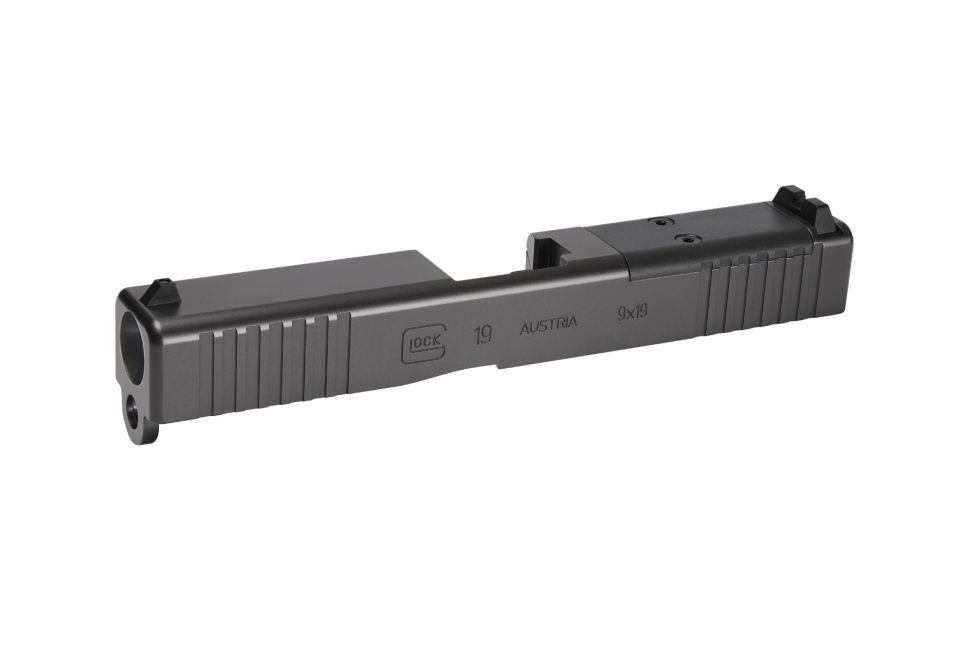
A red dot can make a Glock 19 feel faster, cleaner, and more precise – but only if the slide is right. The wrong cut, the wrong generation, or the wrong internal fit can turn a smart upgrade into a frustrating one. If you’re shopping for a glock 19 optic ready slide, the real question is not just what looks good. It is what fits your pistol, your optic, and the way you actually shoot.
The Glock 19 sits in a sweet spot for a lot of shooters. It is compact enough for daily carry, large enough for serious range work, and versatile enough to serve defensive, recreational, and competition roles. That flexibility is exactly why slide selection matters. One shooter wants a low-mounted dot for faster presentation from concealment. Another wants aggressive window cuts, lighter reciprocating mass, and a sharper look. Both are shopping in the same category, but they are solving different problems.
At a basic level, an optic-ready slide gives you a mounting solution for a red dot without sending your factory slide out for custom milling. That is the obvious benefit. The less obvious one is control over the whole shooting package.
A quality slide can change optic height, sight picture, weight distribution, and cycling characteristics. It can also affect how easily your iron sights co-witness, how confidently your optic holds zero, and how smoothly the pistol returns to target. Those details are not marketing fluff. They show up on the timer, on target, and in how much confidence you have in the gun.
This is where buyers often get tripped up. They focus on the optic cut and ignore the rest of the build. A slide is not just a mounting platform. It is a moving part under stress, and precision matters. Machining tolerances, channel geometry, extractor fit, and finish quality all play into reliability.
This is the comparison most Glock 19 owners need to understand before they buy.
An MOS-style setup gives you flexibility. With adapter plates, you can run different optics without committing to one footprint forever. That makes sense for shooters who are still deciding between optic brands, or who want room to change setups later. The trade-off is height. Plate systems usually place the optic slightly higher, which can affect presentation and sometimes make co-witnessing more dependent on taller suppressor-height sights.
A direct-milled slide is more purpose-built. The optic usually sits lower, the fit can be tighter, and the overall setup often feels more integrated. For shooters who already know the exact optic they want, this is usually the cleaner performance choice. The trade-off is less flexibility. If you change optic footprints later, your options are narrower unless you replace the slide or use additional hardware solutions.
Neither system is automatically better in every case. For a carry gun, many shooters prefer the lower profile and solid fit of a direct-milled cut. For a general-use pistol or a buyer still comparing optics, MOS-style compatibility can be the smarter call.
A sharp slide design can grab attention fast, but generation compatibility is the first checkpoint. Glock 19 Gen 3, Gen 4, and Gen 5 slides are not interchangeable in every detail. Recoil system differences, frame dimensions, and internal component compatibility matter.
That sounds obvious, but it is one of the biggest sources of buyer confusion. A slide that looks perfect in photos is useless if it does not match your frame and internal parts setup. Before you compare finishes, porting, or optic cuts, confirm the exact generation you own and whether the slide is built specifically for that platform.
For many buyers, this is where a Glock-focused retailer has real value. General parts sites often lump too many variants together. A specialist approach makes it easier to sort by model and generation so you are not guessing your way through a fitment problem.
A lot of attention goes to optic brands, but the more practical issue is footprint compatibility. RMR-pattern cuts remain one of the most common standards, and plenty of optics are built around that pattern or close variations of it. Other footprints serve different optics and may need different screw lengths, bosses, or sealing plate considerations.
The best move is to work backward from the optic you actually plan to use. If you already own the optic, choose the slide cut that supports it directly and securely. If you are still shopping, decide whether you want the flexibility of a plate system or the lower mounting height of a dedicated cut.
It also pays to think about long-term use. A range toy can tolerate more experimentation. A concealed-carry pistol needs repeatable reliability, secure mounting, and as few variables as possible.
One reason upgraded slides are popular is the blend of performance and visual impact. Window cuts, serration patterns, and lightening cuts can make a Glock 19 look dramatically different. They can also change how it shoots.
Removing slide mass can alter reciprocating speed and recoil impulse. In some builds, that translates to a flatter, faster feel. In others, especially if the rest of the gun is not tuned around the new slide weight, it can create reliability issues with weaker ammo or specific recoil spring setups. That does not mean lightened slides are a bad choice. It means they are a system choice, not just a cosmetic one.
For a defensive or daily-carry Glock 19, many shooters lean toward moderation. Front and rear serrations, an optic cut, and thoughtful machining can deliver real improvement without pushing the pistol too far from its reliability baseline. For competition or enthusiast builds, more aggressive cuts may make perfect sense.
A premium finish does more than dress up the pistol. It protects the slide from wear, sweat, and repeated use. On a handgun that may be carried close to the body, exposed to weather, and run hard at the range, surface treatment matters.
Cerakote and nitride are two common directions, and each has its place. Cerakote offers strong visual customization and solid corrosion resistance. Nitride is often favored for hardness, wear resistance, and a more duty-oriented feel. The right choice depends on whether your priority is bold aesthetics, hard-use durability, or a balance of both.
The point is simple: finish should support the role of the gun. A carry pistol and a showpiece build do not always need the same answer.
An optic-ready slide does not live in isolation. Your backup iron sights, internals, barrel fit, and recoil assembly all influence final performance.
If you are adding a dot, think about whether you want lower-third co-witness sights or a cleaner window with irons sitting lower in the sight picture. Some shooters want immediate backup capability in the optic window. Others want minimal visual clutter and are comfortable prioritizing the dot. That is preference, not a universal rule.
Internals matter just as much. A precisely machined slide still needs quality parts installed correctly. Extractor function, firing pin safety operation, channel cleanliness, and screw torque all matter more than flashy machining when the gun is on the line. The best builds combine good design with disciplined assembly.
If you run a red dot already, the value is obvious. A dedicated or optic-ready slide gives you a cleaner mounting solution and often a better shooting experience than a compromise setup.
If you are new to pistol optics, the upgrade still makes sense if you are serious about learning the system. The Glock 19 is one of the best platforms for making that transition because it balances carry practicality with enough size to be forgiving in training. A well-made optic-ready slide lets you modernize the pistol without sacrificing its core strengths.
If you never plan to run an optic, the answer is less clear. Some upgraded slides still offer better serrations, lighter weight, and a custom look, but the strongest reason to buy one is still optics compatibility. If that feature is not part of your plan, there may be better ways to spend your upgrade budget.
At Glock Mos Slide Shop, that is the standard worth keeping in mind: buy the slide that matches your pistol’s mission, not just the one that catches your eye first. The right setup should feel precise, dependable, and purpose-built from the first rack of the slide to the last round in the magazine.
A Glock 19 rewards smart upgrades. Pick an optic-ready slide that fits your generation, supports your chosen dot, and respects the balance between performance and reliability, and the pistol becomes more than customized – it becomes more capable.