
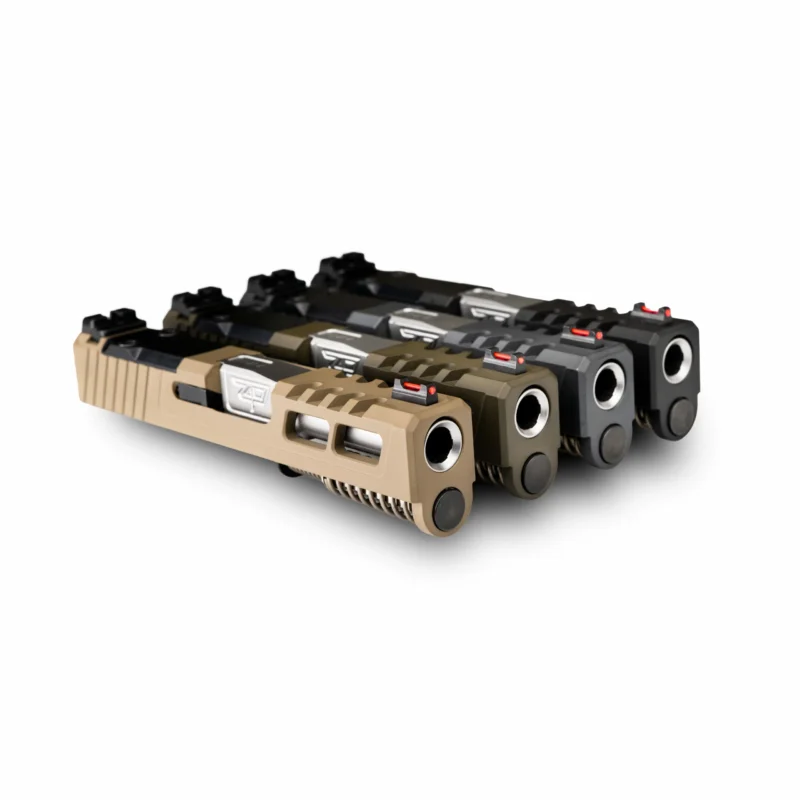
A Glock 43 custom slide can change the entire feel of the pistol before you ever touch the trigger. On a slim, carry-focused platform like the G43, the slide is not just a cosmetic upgrade. It affects sight setup, cycling feel, optic compatibility, front-end weight, and how confidently the gun performs when you need it to.
That is why the right slide is never just about aggressive window cuts or a premium finish. For Glock 43 owners, the smart buy is the one that matches your use case, your barrel and internals, and your expectations for reliability. A carry gun has different priorities than a range build, and a serious upgrade should improve the platform without creating avoidable problems.
The Glock 43 is already popular because it is compact, simple, and easy to carry. But factory slides are built for broad utility, not for every shooter preference. A custom slide gives you more control over how the pistol presents, tracks, and accepts modern accessories.
For many shooters, the biggest reason to upgrade is optics readiness. A factory-style configuration works fine with iron sights, but red dot adoption has changed what people expect from a carry pistol. A properly cut slide can support faster target acquisition and a cleaner visual index, especially for shooters who train regularly or want better performance under pressure.
There is also the handling side. Slide serrations, cut geometry, and weight distribution can make the pistol easier to manipulate and slightly alter how it cycles. Those gains are real, but they are not automatic. Remove too much material or choose a slide with poor machining, and you can trade appearance for inconsistency. That is where product quality starts separating serious components from bargain parts.
If there is one rule with any Glock 43 custom slide, it is this: fitment matters more than features. The Glock platform has a reputation for simple reliability, but that reputation depends on parts being machined to the right tolerances.
A well-made slide should be specifically built for the Glock 43 platform, not treated as a close-enough variant. Buyers sometimes assume all slimline Glock parts behave the same way, but model-specific fit is what keeps installation straightforward and performance predictable. Slide rail dimensions, channel machining, optic cut depth, and internal component compatibility all have to be right.
This is also where experienced buyers slow down and look past marketing photos. Deep serrations and a flashy coating can look great online, but if the slide is not precision-machined for the exact model, the rest of the build becomes a troubleshooting exercise. A strong custom setup starts with correct geometry, quality control, and clean machining.
For most buyers, this is the first real decision. If you want a red dot on your Glock 43, buying an optics-ready slide from the start is usually the cleaner move than modifying a standard slide later. The cut can be engineered for the footprint you actually plan to use, and the overall setup tends to look more refined.
An optics-ready slide also gives you a chance to think about sight height, co-witness preference, and carry profile. A red dot can be a major performance upgrade, but it adds bulk and changes the way the pistol draws and presents. Some concealed-carry users love that trade. Others still prefer the lower-profile simplicity of iron sights.
Neither choice is wrong. It depends on how you carry, how often you train, and whether the pistol is meant to be a dedicated defensive gun, a range toy, or a crossover build. If you know you want an optic, build around it early instead of forcing it into the plan later.
One reason custom slides get attention is visual impact. There is nothing wrong with that. A sharp design, clean coating, and well-executed window pattern can give a Glock 43 a much more refined look. But every cut in the slide has a mechanical consequence, especially on a smaller pistol.
Weight reduction can help the slide feel quicker and give the gun a more responsive character. It can also change cycling behavior, particularly depending on your recoil spring, barrel setup, and ammo choice. On a compact platform like the G43, those changes are more noticeable than they would be on a larger frame.
That does not mean window cuts are a bad idea. It means they should be approached with a performance mindset, not just a style mindset. If the slide is aggressively lightened, you want confidence that it was designed to run, not just designed to sell. Balanced machining is the key. Good slide design removes material intentionally and keeps reliability in view.
Front and rear serrations are one of the most practical upgrades on a custom slide. On a carry pistol, they improve grip when press-checking, chambering, or clearing the gun under less-than-ideal conditions. That matters whether your hands are wet, sweaty, gloved, or moving fast.
The difference is not just whether serrations exist, but how they are cut. Sharp, well-spaced serrations give you purchase without feeling overly abrasive in daily handling. Poorly designed ones can either be too slick to matter or so aggressive that they become annoying over time.
This is one of those details that serious Glock owners appreciate immediately. It does not sound flashy, but better manipulation is one of the fastest ways to feel the value of a slide upgrade.
The finish on a Glock 43 custom slide affects corrosion resistance, wear characteristics, and long-term appearance. Carry guns live in harsh conditions. Sweat, lint, friction from holsters, weather exposure, and frequent handling all test the finish sooner than many buyers expect.
A quality coating helps protect the investment and keeps the slide looking clean after real use. More importantly, a poor finish can start showing weakness quickly, which is frustrating on a component that should feel premium from day one.
Color is personal, but durability should not be. Black nitrides, DLC-style coatings, and other premium treatments generally appeal to buyers who want a strong mix of performance and visual appeal. The right finish should complement the build, not become the weak point of it.
The best Glock 43 custom slide is the one that fits how the pistol will actually be used. A daily carry build usually benefits from disciplined choices – dependable machining, practical serrations, an optic cut if needed, and a finish that can handle abuse. A competition or range-focused build might lean harder into weight reduction, style, and a more aggressive visual profile.
This is where buyers can save themselves money and frustration by being honest about the mission. If the gun spends most of its life inside the waistband, reliability and concealability should lead the decision. If it is a showcase build that still gets range time, aesthetics may carry more weight. Most shooters want some blend of both, but the priority order matters.
At Glock Mos Slide Shop, that is the difference between buying a part and building a setup with purpose. The slide should support the whole pistol, not fight against it.
The most common mistake is buying based on looks alone. Good photos do not tell you how clean the optic cut is, how well the internals fit, or how consistently the slide will run once assembled.
Another mistake is ignoring the rest of the system. Slides do not operate in isolation. Barrel fit, recoil spring weight, sights, optic selection, and internal parts quality all affect the final result. If one part is out of spec or poorly matched, the slide often gets blamed for problems it did not create.
The third mistake is assuming lighter always means better. Sometimes it does. Sometimes it creates a pistol that becomes pickier about ammunition or less forgiving over time. Performance upgrades should improve the shooting experience, not narrow the gun’s reliability window.
Precision machining, model-specific design, finish quality, and practical feature choices separate premium slides from low-tier alternatives. The difference often shows up in the details – clean edges, proper tolerances, reliable optic mounting surfaces, and overall consistency.
Serious buyers also look for a slide that feels like it was built by people who understand Glock performance, not just Glock styling. There is a difference between parts that imitate the look and parts that improve the platform.
If you are investing in a Glock 43, the slide should bring more than appearance. It should give you better capability, cleaner handling, and confidence every time the pistol comes out of the holster. Buy with that standard, and the upgrade will feel worth it long after the finish stops being new.