A Glock with the wrong suppressor-height sights feels off immediately. The window looks crowded, the irons sit too high or too low, and what should be a clean sight picture turns into a guessing game. If you are researching how to choose Glock suppressor sights, the right answer starts with your setup, not the tallest sights on the page.
Suppressor sights are not just “higher irons.” They are a fitment decision tied to your slide, your optic, your barrel setup, and the way you actually shoot. For some Glock owners, they are backup sights for an optic-ready pistol. For others, they are there to clear a suppressor body. Those are related jobs, but they are not identical. That difference is where most buying mistakes happen.
The first question is simple: what do you need the sights to do? If you are running a red dot on an MOS or milled slide, your suppressor sights are usually there to co-witness or act as a dependable backup if the optic goes down. If you are shooting suppressed without an optic, the goal is different. You need enough height to see over the can while keeping the gun fast and natural on presentation.
A lot of buyers assume taller is better. It is not. Extra height can slow sight acquisition, snag more during carry, and create an awkward sight picture if the height is unnecessary for your slide and optic combination. Performance parts only improve performance when they match the application.
Glock fitment is never a detail to gloss over. A sight set that works on one model or generation may not deliver the same result on another, especially once slide dimensions, optic cuts, and intended use enter the picture. Before you look at sight height, confirm the exact pistol model and generation you are building around.
A Glock 17 Gen 3 range setup, a Glock 19 MOS carry gun, and a Glock 43 slimline with an optic all present different sighting needs. Slide width, sight radius, and optic footprint can change what “right height” looks like. Even within the Glock family, there is no universal suppressor-sight answer that fits every pistol equally well.
This is one reason dedicated Glock-focused retailers matter. Model-specific knowledge saves time, but more importantly, it prevents stacking incompatible parts on a platform that depends on precise fit.
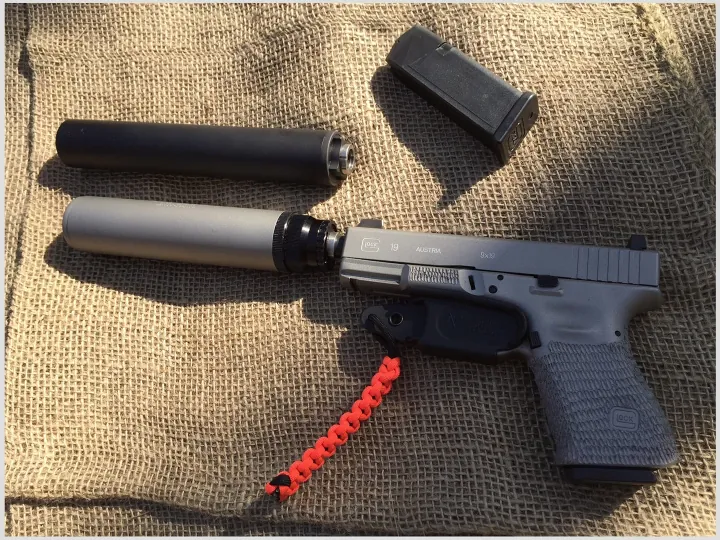
Your slide configuration matters as much as the pistol model. On a standard iron-sight slide with a threaded barrel and suppressor, you are choosing sights primarily for physical clearance over the suppressor. On an MOS slide or custom milled slide, the optic height becomes part of the equation.
MOS systems often sit optics slightly higher than some direct-milled setups because of the plate interface. That can change the height you need for a lower-third or absolute co-witness. A direct-milled slide may let you run a slightly lower iron set and still maintain a clean backup sight picture through the optic window.
If your goal is a red-dot Glock with backup irons, do not choose based only on the word suppressor. Choose based on the optic mounting height and the co-witness level you want.
Sight height is the heart of the decision. Most buyers are balancing one of three outcomes: clear the suppressor, co-witness with the optic, or do both reasonably well.
For a dedicated suppressed pistol with no optic, you generally want enough height to see above the can without making the pistol feel top-heavy in the sight picture. For an optic-equipped Glock, many shooters prefer a lower-third co-witness. That keeps the irons visible in the bottom portion of the window without dominating it. Others want an absolute co-witness, where the irons align more directly in the optic window. That can feel familiar, but it can also clutter the view.
There is no universal best option here. Competitive shooters often favor the least visual obstruction possible, while defensive users may prioritize a stronger backup iron presence if the optic fails. Your use case should decide the height, not trend-driven buying.
Lower-third co-witness is popular for good reason. It gives you backup capability while preserving a cleaner red-dot window. The dot remains the primary aiming reference, and the irons stay available without competing for attention.
Absolute co-witness puts the iron sights more centrally in your optic window. Some shooters like the immediate visual confirmation, especially if they trained extensively on irons first. The trade-off is a busier sight picture, which can slow target focus for some users.
If this is your first red-dot Glock, lower-third is usually the more forgiving place to start. It gives you redundancy without turning the optic into an iron-sight frame.
Height gets the attention, but sight design changes how the gun tracks and how fast your eye picks up the front blade. A blacked-out rear with a high-visibility front is a strong performance choice for many Glock shooters. It draws the eye where it should go and keeps the rear from becoming visually noisy.
If your pistol is carrying a red dot, a simple rear and a crisp front often make the most sense. Your irons are secondary until they are needed. If the gun is primarily iron-sighted and suppressed, a more traditional three-dot or tritium setup may fit your priorities better, especially for low-light utility.
This is where mission matters. A range pistol, a carry pistol, and a duty-style setup should not automatically wear the same sight picture.
Fiber optic sights are fast in bright conditions and common on competition builds. They are excellent for speed, but not always the first choice for a hard-use defensive gun.
Tritium offers low-light visibility and makes sense for carry or defensive applications. Plain black sights are durable, clean, and often ideal as backup irons on a dot-equipped slide. If the optic is doing the main work, a sharp plain set can be the right call.
Again, it depends on the job. The best suppressor sights are the ones that fit the gun’s role without adding distractions.
A compact optic window can feel cramped if your suppressor sights are too tall or too bulky. This is especially noticeable on concealed-carry builds where slide length, sight radius, and optic size are already working in tighter space. Large rear blades and oversized front posts can take over the window and make the dot harder to track under recoil.
A full-size Glock with a larger optic gives you more room to work with. A slimline or compact setup may require more restraint. Precision is not just about seeing the irons. It is about keeping the whole aiming system clean, fast, and repeatable.
Suppressor sights take abuse. They need to hold zero, resist wear, and stay sharp after repeated draws, recoil cycles, and slide manipulations. Cheap sights can look fine in product photos and still fail where it matters most – under use.
Steel sights are the standard for serious Glock upgrades. They offer the durability expected on a hard-running pistol and are far better suited than bargain-level alternatives for long-term reliability. If you are already investing in a quality slide, optic cut, or suppressor-ready setup, this is not the place to cut corners.
At Glock Mos Slide Shop, that same logic applies across every meaningful upgrade. Precision parts should work together, not just fill a cart.
The biggest mistake is buying by label alone. “Suppressor height” does not guarantee the right co-witness, the right suppressor clearance, or the right fit for your specific Glock. That term is useful, but it is not exact enough to make the whole decision for you.
Another mistake is choosing sights only for looks. A tall, aggressive sight set may photograph well on a custom slide, but if the front blade is too thick, the rear notch too tight, or the overall height wrong for the optic, you will feel it on the first range session.
The last mistake is skipping the full build plan. If you know an optic, threaded barrel, or slide upgrade is coming later, buy sights that match the final setup instead of replacing parts twice.
If you are figuring out how to choose Glock suppressor sights, narrow it down this way: identify the exact Glock model and generation, confirm whether the slide is MOS, direct milled, or standard, decide whether the sights are for suppressor clearance, optic backup, or both, and then choose the lowest height that still gets the job done cleanly. From there, match the sight picture to the pistol’s role.
That approach keeps the build honest. The best Glock upgrades are not the most extreme parts. They are the ones that make the pistol faster, cleaner, and more dependable every time you press out on target.
When your sights match the way the gun is actually built, everything starts to line up the way it should.