
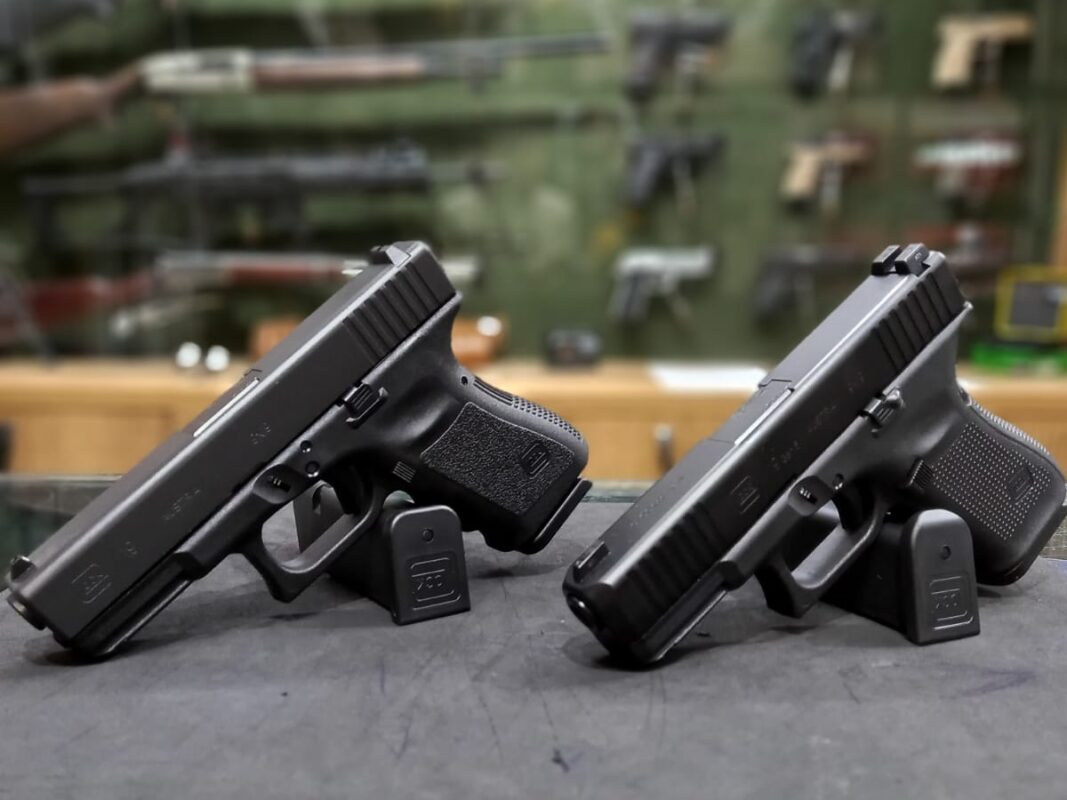
If you’re comparing glock 17 gen 3 vs gen 5, you’re probably not asking which one goes bang more reliably. Both have earned their reputation. The real question is where the performance differences show up – in grip feel, parts compatibility, trigger character, optics options, and how much customization you want from the start.
That matters because the Glock 17 is still one of the cleanest foundations for duty use, range work, home defense, and competition. But Gen 3 and Gen 5 are not just separated by age. They appeal to different shooters, and they reward different upgrade paths.
The Gen 3 is the classic workhorse. It has the older frame texture, finger grooves, a single recoil spring setup, and one of the largest aftermarket ecosystems in the handgun world. If you like proven simplicity and nearly endless customization, Gen 3 still punches far above its age.
The Gen 5 is the more refined factory package. Glock updated the trigger feel, removed the finger grooves, added a flared magwell, improved ambidextrous controls, and introduced the Glock Marksman Barrel. It feels more modern in the hand and often needs fewer immediate changes for shooters who want a stronger out-of-box setup.
That does not automatically make Gen 5 better. It makes it better for some uses and less convenient for others, especially if your priority is parts interchangeability or a very specific slide build.
The first difference most shooters notice in a Glock 17 Gen 3 vs Gen 5 comparison is the grip.
Gen 3 frames have finger grooves. Some shooters lock into them well and get a consistent purchase every draw. Others hate them, especially if their hand size does not line up with Glock’s groove spacing. The Gen 3 texture is also more dated. It works, but it does not feel as planted as later generations when your hands are wet or you’re running fast strings.
Gen 5 removed the finger grooves entirely, and that change alone won over a lot of shooters. The grip feels more universal. It fits a wider range of hand sizes, and it gives you more freedom to place your support hand without the frame telling you where your fingers should go.
Gen 5 also adds a slight flare at the magwell. It’s not a giant competition funnel, but it helps during reloads. For practical shooting, defensive training, or anyone who values cleaner magazine insertion under pressure, that feature is easy to appreciate.
If you prefer a traditional grip shape and already know the Gen 3 grooves work for your hand, the older frame is still a strong option. If you want the safer bet for general ergonomics, Gen 5 usually wins.
Neither pistol has a match trigger from the factory, but the Gen 5 trigger system is generally considered an improvement.
Gen 3 triggers often have that familiar Glock wall and break, but they can feel a little more abrupt or gritty depending on the individual pistol. Some shooters like that old-school Glock character because it feels predictable and easy to tune with aftermarket parts.
Gen 5 triggers tend to feel smoother from the factory, with a more refined pull and reset. It is still unmistakably a Glock trigger, but the overall shooting experience is a little cleaner. For the average buyer who wants solid performance without immediately swapping internals, Gen 5 has the advantage.
The trade-off is that Gen 3 remains a favorite for people who want to build around a specific trigger setup. The aftermarket is enormous, and the platform has been worked over by gunsmiths, competitors, and enthusiasts for years.
Glock’s Gen 5 brought the Glock Marksman Barrel, which is one of the headline upgrades. In practical terms, most shooters see this as a modest accuracy improvement rather than a night-and-day jump.
At defensive distances, both generations are more than capable. At longer distances or in more disciplined range work, Gen 5 can show a little more refinement. The barrel design and updated lockup contribute to that improved feel.
Still, accuracy is never just about the barrel. Your trigger control, ammo choice, sight setup, and grip matter more than many buyers want to admit. A well-set-up Gen 3 with quality components can shoot exceptionally well. A stock Gen 5 just gives you a slightly more polished starting point.
This is one area where Gen 5 makes a clear case for itself.
Gen 3 is more limited. It was built in an era before ambidextrous controls became a bigger priority. Right-handed shooters may not care, but left-handed users or anyone who trains support-hand manipulations will notice the difference.
Gen 5 includes an ambidextrous slide stop and a reversible magazine release. That gives it broader usability right out of the box. If you’re buying one Glock to serve multiple roles and multiple shooters, Gen 5 is simply easier to live with.
For many Glock owners, this is where the decision gets serious.
Gen 3 has one massive advantage: aftermarket support is everywhere. Slides, barrels, internals, sights, guide rods, trigger kits, compensator-ready builds, and custom finishes are widely available. If your goal is to create a highly personalized pistol, Gen 3 is one of the strongest platforms in the market.
That matters for buyers who want an optics-ready setup but do not want to be boxed into a factory configuration. A quality Gen 3 slide build lets you choose your optic cut, window pattern, serration style, coating, and performance features with more freedom. For many enthusiasts, that flexibility is the whole point.
Gen 5 also has a strong and growing aftermarket, but it is not always as broad or as simple as Gen 3 when it comes to cross-compatibility and older legacy parts. Some shooters do not mind that because Gen 5 starts at a higher factory standard. Others care a lot, especially if they already own Gen 3-compatible parts or plan to build from the slide up.
If optics are a major priority, the question is not just Gen 3 or Gen 5. It is whether you want a factory MOS route or a dedicated optics-cut slide. A dedicated milled slide often gives you a lower optic position and a more tailored fit, which is why many serious shooters still prefer that path over plate-based systems.
For shoppers focused on precision fitment and model-specific slide upgrades, this is where a specialist retailer like Glock Mos Slide Shop earns its value. Generation details matter, and the wrong assumption can turn a simple upgrade into a parts headache.
Both generations have a strong reliability record. That is part of why this comparison stays relevant year after year.
Gen 3 has the benefit of long-term familiarity. Armorers know it, parts are common, and troubleshooting is straightforward. If you value a system that has been proven across decades of use and modification, Gen 3 still inspires a lot of confidence.
Gen 5 is also highly reliable, but with incremental factory improvements that make the pistol feel more current. The finish, internals, and recoil characteristics reflect Glock’s evolution rather than a radical redesign.
In plain English, you are not choosing between reliable and unreliable. You are choosing between old-school proven simplicity and a more modern factory refinement.
If you’re buying a Glock 17 primarily as a base gun for a custom build, Gen 3 is hard to ignore. It gives you unmatched freedom, broad parts availability, and a lower barrier to building exactly what you want. That is especially true if you already understand Glock fitment and want to choose every detail yourself.
If you want a pistol that feels better out of the box, Gen 5 is often the smarter buy. The grip is more forgiving, the trigger is more polished, the controls are better, and the overall package feels closer to what many shooters end up trying to create through upgrades anyway.
Competitive shooters may lean Gen 5 for ergonomics and reload support, but many still choose Gen 3 because they want specific slide and trigger combinations. Home defense users often appreciate the simplicity of either platform, while concealed-carry users usually make this decision less on generation alone and more on the exact role of the gun in their lineup.
Choose the Gen 3 if you care most about aftermarket depth, custom slide options, and building a Glock around your exact preferences. It is still one of the best performance foundations in the category.
Choose the Gen 5 if you want better ergonomics, more refined factory features, and a pistol that asks less of you before it feels dialed in. It is the more modern shooter-friendly package.
The best answer comes down to how you buy firearms in the first place. If you buy the base gun and immediately start planning cuts, optics, coatings, and internal upgrades, Gen 3 makes a lot of sense. If you want strong factory performance with fewer changes, Gen 5 is probably the better fit.
A Glock should match the way you shoot, not just the way the spec sheet reads. Get clear on whether you want a project platform or a polished starting point, and the right generation usually reveals itself fast.