
You notice the difference the first time you press the trigger on a compensated-style build versus a slide that simply sheds weight up top. That is really what the ported vs window cut slide debate comes down to – not just appearance, but how the gun tracks, how it cycles, and what trade-offs you are willing to accept on a Glock build.
For Glock owners chasing faster follow-up shots, better balance, or a sharper custom look, both options can make sense. But they are not interchangeable. A ported setup changes how gases leave the barrel and slide assembly. A window cut slide changes mass, cooling, and style, but it does not redirect gas on its own. If you are building around concealed carry, competition, or a range-focused pistol, that difference matters.
A ported slide is typically paired with a ported barrel. Openings in the top of the slide line up with barrel ports, allowing gas to vent upward when the pistol fires. The goal is straightforward – reduce muzzle rise and help the gun stay flatter under recoil.
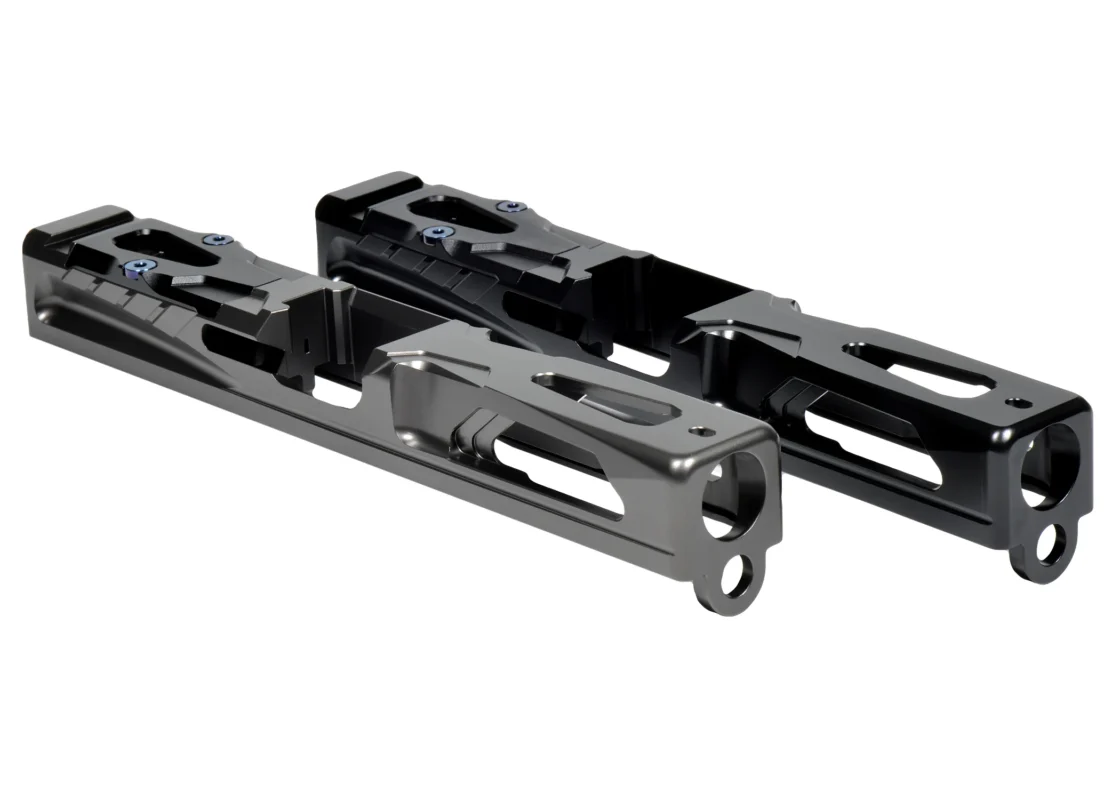
A window cut slide has machined openings in the slide, usually on top, sides, or both. Those cuts reduce slide weight and expose the barrel, but unless the barrel itself is ported, there is no gas redirection happening. In other words, a window cut is a slide modification. Porting is a system involving both the slide and barrel.
That is where a lot of buyers get tripped up. They see an aggressive cut slide and assume it will behave like a ported setup. It might cycle differently because of reduced mass, and it may feel quicker in some builds, but it will not offer the same recoil control effect as actual barrel porting.
When barrel gases vent upward through the ports, the pistol is pushed slightly downward, countering muzzle flip. On a Glock platform, that can translate to a flatter shooting feel, faster sight return, and more control during rapid strings.
For range use and competition-style shooting, that is a real advantage. Shooters running red dots often appreciate how the optic settles faster in the window after each shot. If your priority is speed and recoil management, porting earns its reputation.
But porting comes with trade-offs. You are venting hot gas and debris upward, which can increase blast and flash, especially in shorter-barrel setups. That can matter in low-light use, defensive roles, or retention-style shooting positions. Porting can also be pickier about ammo depending on the slide weight, recoil spring, and overall build.
None of that makes porting unreliable by default. It does mean the setup needs to be thought through as a complete system instead of a cosmetic add-on.
A window cut slide removes material from the slide, which reduces reciprocating mass. Depending on the size and location of the cuts, that can slightly change how the slide cycles and how the pistol balances in hand.
On some Glock builds, especially optics-ready setups, window cuts can help offset the added weight of an optic. They also give the slide a more custom, performance-driven look, which is a major reason many owners choose them in the first place. There is nothing wrong with that. A slide upgrade should perform well, but it should also fit the build you want.
There is a practical side too. Window cuts can improve barrel visibility for inspection and allow more airflow around the barrel. That does not turn the gun into a cooler-running machine, but it can help with heat dissipation during long range sessions.
Still, a window cut slide does not automatically mean softer recoil or flatter tracking. Any change in feel usually comes from altered slide mass and cycling behavior, not redirected gas.
If your main question is which setup shoots flatter, the answer is usually the ported one. That is the point of barrel porting. It is designed to fight muzzle rise directly.
If your question is which setup feels quicker or lighter, a window cut slide can influence that, especially when paired with the right barrel and spring weight. Lighter slides can cycle faster, but there is a line between responsive and finicky. Remove too much mass without matching the rest of the setup, and reliability can suffer.
This is why experienced Glock builders look at the whole package: slide weight, barrel type, optic weight, recoil spring rate, and the ammo being used. A factory-weight slide with a ported barrel may behave more predictably than an aggressively lightened slide with no other tuning. On the other hand, a well-machined window cut slide on a properly matched build can run exceptionally well.
The best choice depends on whether you want gas-driven recoil control or weight-driven handling changes.
A lot of upgraded pistols look fast on paper. The better question is whether they stay reliable with the ammo and use case you actually care about.
Ported setups can be excellent performers, but they can also be less forgiving when you start stacking variables. Shorter Glock models, weak practice ammo, oversized optics, and incorrect spring weights can all affect cycling. That does not mean avoid them. It means buy quality parts and build with purpose.
Window cut slides are often simpler in that respect, especially if paired with a standard barrel. You still need proper machining, correct fitment, and model-specific compatibility, but you are not also managing gas timing through barrel ports. For many owners, that makes a window cut slide the easier path to a custom look with fewer functional variables.
That is one reason product quality matters so much. Precision machining, correct tolerances, and Glock-specific fitment are not marketing buzzwords in this category. They are the difference between a clean-running slide and a frustrating parts pile.
For most concealed-carry users, a window cut slide is often the more practical choice. You can reduce slide weight, keep a strong custom appearance, and avoid the extra blast and flash that can come with porting.
A ported carry gun is not automatically a bad idea, but it asks for more honest consideration. If the pistol may be used in low light or from compressed shooting positions, the upward gas venting becomes more relevant. Some shooters are comfortable with that trade-off. Others would rather keep the system simpler.
If your carry priority is dependable daily function with some visual and handling upgrades, a non-ported window cut slide is usually the safer middle ground.
This is where porting gets more attractive. If the pistol is built for speed, flatter tracking, and fun on the range, a ported setup can absolutely deliver. The benefit is easier to appreciate when you are pushing pace and watching how quickly the sights return.
A window cut slide still has a place here, especially for shooters who want a lighter, optic-ready setup without the noise and blast of a ported barrel. Some prefer the cleaner feel of a tuned non-ported system. Others want every advantage they can get in recoil control.
There is no universal winner. There is only the better match for your style of shooting.
If you are shopping specifically for a Glock slide upgrade, start with your actual goal, not the photo that caught your eye. If you want recoil reduction and a flatter impulse, look at a properly matched ported slide and barrel combination. If you want reduced weight, optics-ready flexibility, and a custom visual profile, a window cut slide may be exactly what you need.
Also pay attention to model and generation compatibility. A slide that works beautifully on a Glock 17 Gen 3 setup may not be the right answer for a Glock 19 carry build or a slimline platform. Barrel length, port spacing, optic cut, and internal parts compatibility all matter.
This is where a Glock-specialized source like Glock Mos Slide Shop brings real value. The right slide is not just about style. It is about getting the machining, cut pattern, and fitment right for your exact platform.
If you want the shortest answer in the ported vs window cut slide debate, here it is: porting is for recoil control, window cuts are for weight reduction and style, and sometimes a build can combine both.
The better answer is more specific. A carry gun usually benefits from simplicity. A range gun can afford to be more specialized. A competition-minded shooter may love the flatter feel of porting, while a daily carrier may prefer the cleaner practicality of a window cut slide with a standard barrel.
The smartest upgrade is the one that fits your Glock, your ammo, and the way you actually shoot. Build for performance you can feel, not just features you can photograph.