
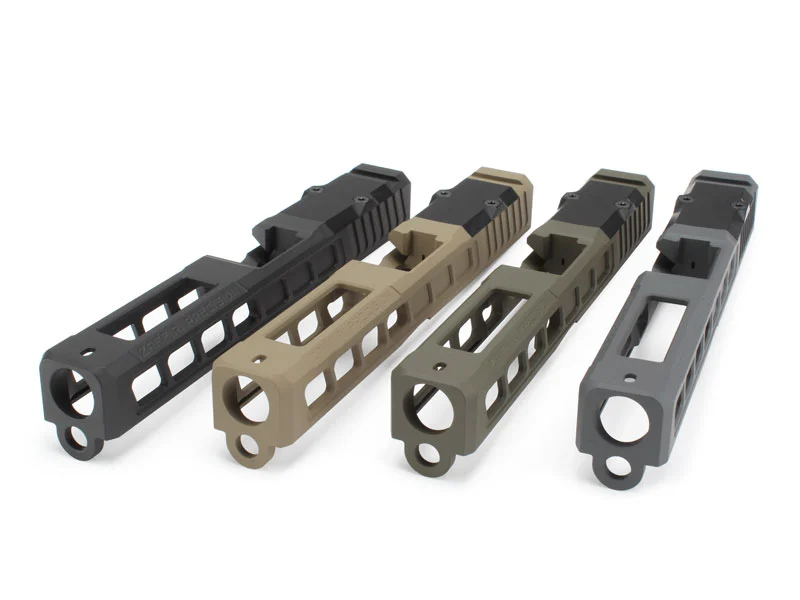
A bad slide upgrade usually shows itself fast. The optic sits too high, the fit feels off, recoil behavior gets weird, or the pistol starts looking better than it runs. A good glock 17 gen 3 slide upgrade does the opposite – it sharpens function, improves sighting options, and gives your pistol a cleaner, more purpose-built setup without giving up the reliability that made the platform popular in the first place.
That matters because the Glock 17 Gen 3 is still one of the most upgraded full-size Glock platforms in the country. It has a huge aftermarket, a familiar recoil impulse, and enough room on the slide to support everything from a clean carry build to a competition-focused optic setup. But not every upgrade path makes sense for every shooter, and not every slide brings the same value.
The first question is simple: what are you trying to gain? On this platform, most shooters are chasing one of four things – optics readiness, reduced reciprocating weight, better heat and debris management through window and serration cuts, or a stronger visual finish that gives the pistol a custom look.
Optics readiness is the biggest reason many owners replace the factory slide. A purpose-built optic cut lets you mount a red dot lower and more securely than a generic adapter plate setup. That usually means a better sight picture, faster target acquisition, and less compromise in the overall profile of the pistol.
Weight reduction can also change how the gun feels in motion, but this is where trade-offs start to matter. A lighter slide can cycle faster and feel more responsive, especially when paired with the right spring setup and ammo. At the same time, going too aggressive on cuts can make the system more ammo-sensitive if the rest of the build is not balanced correctly.
Then there is durability and handling. Front and rear serrations, improved coatings, and quality machining are not cosmetic extras when done right. They affect press checks, manipulation under stress, corrosion resistance, and long-term wear.
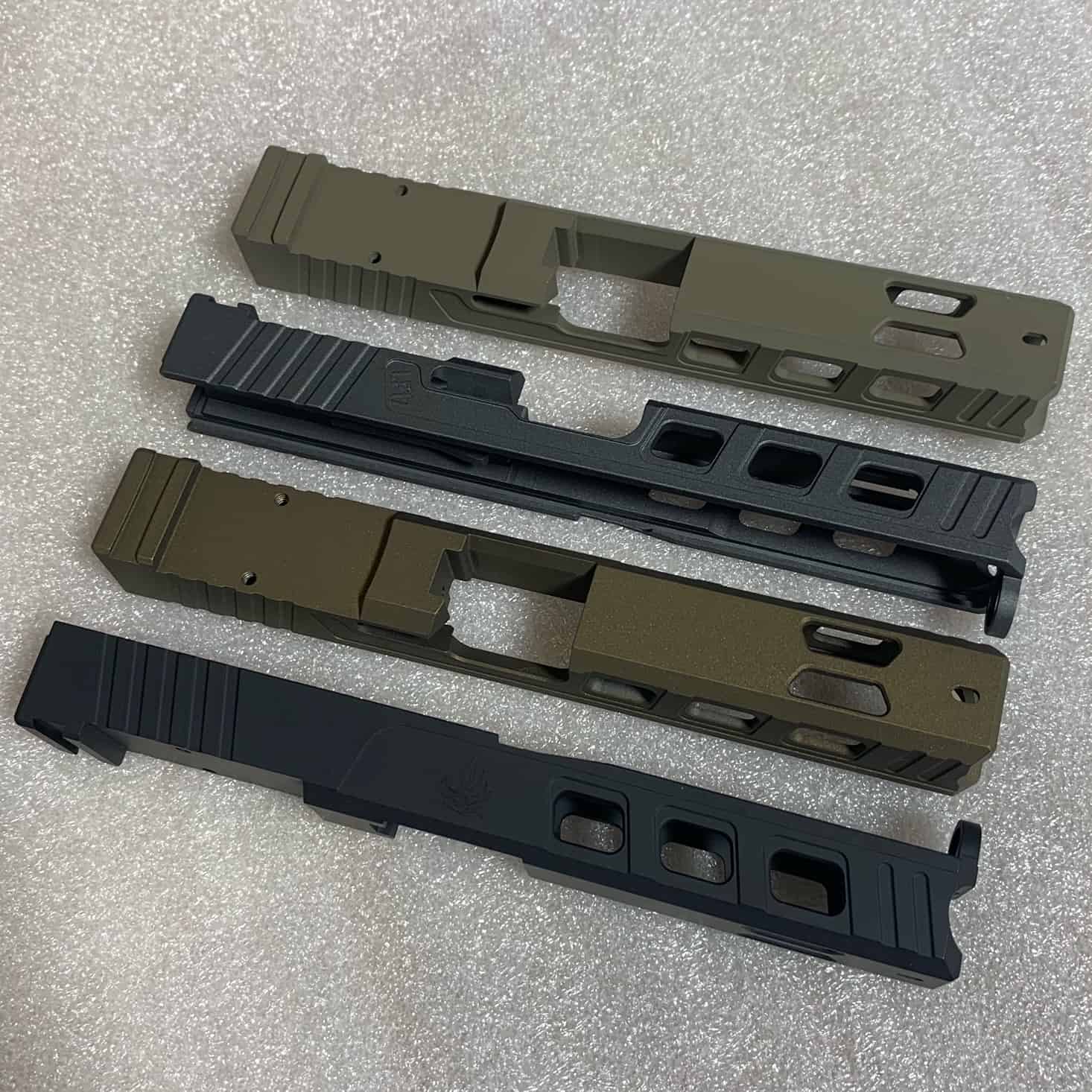
A range toy, a duty-style setup, and a competition pistol should not wear the exact same slide just because the fitment matches. The best upgrade depends on how the gun will actually be used.
Reliability should lead the conversation. That usually means staying with a well-machined slide, proven optic footprint, and moderate cuts instead of the most aggressive windowed design on the market. Clean serrations, a quality finish, and an optic cut for a proven red dot are usually more valuable than chasing the lightest possible slide.
If this is a hard-use pistol, lower-profile upgrades tend to age better. You want improved capability, not a setup that becomes picky about recoil springs, ammunition, or environmental debris.
This is where more visual freedom makes sense. Window cuts, port-friendly designs, and premium finishes can transform the look and feel of a Gen 3 Glock 17 without turning it into a maintenance project. If the pistol is mostly used for practice, recreational shooting, or a personalized collection build, you can afford to prioritize aesthetics a little more.
That said, quality still matters. A flashy slide with poor tolerances is still a poor upgrade.
Competition builds benefit the most from intentional slide changes. A red dot cut is almost a given, and reduced slide mass can help the pistol track flatter and return faster with the right tuning. This is where advanced shooters may pair the slide with a compensator, aftermarket barrel, and recoil system built around a specific load.
The upside is real. The downside is that the margin for error gets smaller. Once you start tuning around reduced mass, every component matters more.
For most buyers, the biggest fork in the road is whether to choose an optics-ready slide or a standard slide with iron sights only. If you plan to run a red dot now or even six months from now, it makes more sense to buy the optic-ready slide upfront.
An optics-ready Glock 17 Gen 3 slide upgrade gives you a cleaner mounting solution and keeps the pistol current with how many shooters train today. Red dots are no longer niche. They are mainstream for defensive shooters, competitive shooters, and enthusiasts who want faster sight acquisition and better performance at distance.
The key is footprint compatibility. Not every optic cut supports the same red dot pattern, and this is where buyers often get tripped up. RMR-pattern cuts remain one of the most common and versatile choices, but the right answer depends on the optic you actually plan to mount, not the optic you might buy someday.
If you know your optic, buy to that footprint. If you do not, buy carefully and leave yourself a realistic path forward.
The visual side of a slide upgrade gets plenty of attention, but these machining choices affect function too.
Front serrations are one of the easiest upgrades to appreciate immediately. They give you more traction for press checks and manipulations, especially if your hands are wet, sweaty, or gloved. Rear serrations matter just as much, but front serrations often make the slide feel more modern and more useful in hand.
Window cuts are more specialized. They reduce weight and can expose a fluted or TiN-coated barrel for a stronger custom look. On some builds, they contribute to a faster-cycling feel. On others, they are mostly aesthetic. Neither answer is wrong. The point is to be honest about why you want them.
A slide with every possible cut is not automatically better. More machining can mean less mass, different recoil behavior, and more attention needed when pairing internal parts. For many shooters, a balanced cut pattern gives the best blend of speed, durability, and style.
This is where premium slides separate themselves from cheap aftermarket parts. A Glock slide lives under constant stress. It cycles hard, carries the optic load if you run one, and takes wear across the rails, breech face, and contact surfaces. If the machining is sloppy or the finish is weak, the problems show up quickly.
A quality Glock 17 Gen 3 slide upgrade should have precise dimensional consistency, clean channel work, properly cut optic pockets where applicable, and a finish that holds up to heat, holster wear, and regular use. Nitride and quality Cerakote options both have their place, but the real issue is application quality, not just finish type on a product page.
American-made slides tend to appeal to buyers who care about machining standards and long-term confidence, and that is not just branding talk. With model-specific platforms like Glock slides, tight quality control matters because small fitment issues become obvious the moment the gun is assembled and cycled.
This depends on your comfort level and your parts plan. A stripped slide gives you more control. You can choose your barrel, internals, sights, and optic setup one piece at a time. That is ideal for experienced builders who already know what they want.
A complete slide is the easier route for buyers who want a cleaner install process and fewer compatibility questions. It can also reduce the chances of mixing mismatched small parts from different sources.
Neither option is universally better. If you already have a trusted barrel and internal parts kit, a stripped slide may be the smarter value. If you want speed, simplicity, and a more plug-and-play upgrade, a complete slide often makes more sense.
The biggest mistake is shopping by looks first and fitment second. The Glock 17 Gen 3 is specific enough that generation and model compatibility must be confirmed before anything else. A slide can look perfect in photos and still be wrong for your frame or intended setup.
The second mistake is ignoring the full system. Slide weight, barrel choice, recoil spring rate, optic weight, and ammo pressure all work together. The more customized the build becomes, the more those relationships matter.
The third mistake is buying an optic-ready slide without a clear optic plan. A good slide cut is only good if it matches your actual red dot and mounting approach.
This is also why specialized retailers matter. A Glock-focused shop such as Glock Mos Slide Shop is built around generation-specific fitment and performance-driven options, which is exactly what serious buyers need when they are spending real money on a primary component.
A worthwhile slide upgrade does not just change the look of the pistol. It improves how the gun interfaces with your eyes, your hands, and your intended use. It should support faster sighting, cleaner manipulation, better component compatibility, or a more refined recoil feel. Ideally, it does several of those at once.
That is why the best upgrade is rarely the cheapest and rarely the most extreme. It is the one that matches your use case, respects the reliability of the platform, and adds performance in a way you can actually feel on the range.
If you are building out a Glock 17 Gen 3, start with the slide that supports the gun you want to shoot a year from now, not just the one that looks good on your bench today.